Barnet, Steve

Steve Barnet

Email: barnet@icecube.wisc.edu

Address:
Office of the Vice Chancellor for Research (OVCR)
Wisconsin IceCube Particle Astrophysics Center (IceCube/WIPAC)
CI Systems and Ops Manager
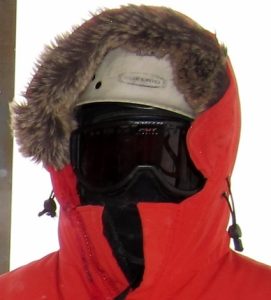
Steve Barnet Headshot

Biography

Steve Barnet is a CI Systems and Ops Manager for the Wisconsin IceCube Particle Astrophysics Center (WIPAC). He has been with the IceCube project since 2005, at the beginning of construction. During that time, he has worked on the computing, storage, and infrastructure systems that provide the foundations for data analysis. He has deployed to the South Pole twice during that time.


2026 Session

What Could Go Wrong? Building a Long-Term Archive in the Real World


2019 Session

IceCube Computing – Behind the Scenes Tech


2018 Session

Title: Big Data on Ice
Description:
IceCube is a neutrino detector located at the geographic South Pole. It records neutrino interactions and is designed to search for the highest-energy neutrinos from astrophysical sources. The instrument itself comprises over 5400 individual sensors that collectively capture about 1 Terabyte of data per day. This talk will provide an overview of the storage and data handling systems deployed to deliver that data to our physicists for analysis and ultimately publication.

Blasinski, Matt (Biz)

Matt (Biz) Blasinski

Credentials: (He/Him)

Email: matt.blasinski@wisc.edu

Address:
Division of Information Technology (DoIT)
Email Systems Engineer and Developer

Biography

A graduate of UW-Madison’s Computer Science department, Matt Blasinski has been part of the messaging and electronic collaboration tools team at UW’s Division of Information of Technology (DoIT) for over 18 years. During that time he has built a variety of provisioning and management tools for the messaging systems offered by DoIT. Matt is currently moving many of these tools to the cloud so that they are more portable, reliable, and maintainable and so that changes reach customers quickly and easily. Outside of work, Matt is an avid cave diver where he puts his experience managing redundant systems, precise planning and attention to detail, and teamwork to good use outside of information technology.


2021 Session

Lunchtime Communities of Practice (CoPs) Drop-In Session


2019 Session

Exposing Impostor Syndrome: Answering the 5 Ws about Impostor Syndrome


2018 Session

DevOps, Diving, or Death….Choose 2!

Buszka, Sarah

Sarah Buszka

Email: sarah.buszka@wisc.edu

Address:
Division of Information Technology (DoIT)

2019 Session

Building an IT Community


Biography

Sarah Buszka manages Critical IT Infrastructure and Life & Health Safety Services for UW-Madison. Services in her portfolio include the campus security video service, door access service, and regulatory/compliant data server infrastructure environments. She has led several campus infrastructure refresh and migration initiatives, including the cardholder data environment (CDE) refresh. Sarah enjoys working closely with UWPD, FP&M, and EH&S to protect the life and health safety of campus and the research enterprise.

Dagnon, Tamra

Tamra Dagnon

Email: tamra.dagnon@wisc.edu

Address:
Division of Information Technology (DoIT)
Project Management Office

2019 Session

SPRINT! Tackle big problems in a week


2018 Sessions

Session 1
Title: Don’t Panic! Success is a bigger target than you think
Co-Presenters: Robert Merrill, Shannon Larson
Description:
Someone has handed you a project—actually just an idea and a deadline—and you’re not really a project manager or business analyst. How can you set everyone up for success, without losing your minds in the process? This panel discussion with two BAs and a PM from the CIO’s Office PMO will leave with you some essential concepts and pro tips to help you get from almost zero information to a scope, some high-level requirements, and a realistic budget and schedule that tilt the odds of success
in your favor.
Key Session Takeaways:

  • Success – What is the real problem or opportunity?
  • Scope – Agreeing on what we’re not doing (and doing)
  • Requirements – Understanding and describing possible solution capabilities
  • Estimating – effort, budget, schedule, and what if it won’t fit?

Session 2
Title: The SIPOC tool: How to create a visual model of a high-level process
Description
This flash talk will provide an overview of a simple tool you can use to collaboratively document a high-level business process. The SIPOC is invaluable in aiding project scope discovery and quickly bringing people to a common understanding.


Biography

Tamra Dagnon joined the UW–Madison Project Management Office as a Senior IT Business Analyst in
2015, from John Deere Financial in Madison and Des Moines. Beginning in marketing, Tamra changed
careers to IT while with Deere, serving as a Project Manager, Test Lead, and Product Manager before
settling on Business Analysis. Tamra then led project and requirements definition efforts on many
projects, from the very small to extra-large, multi-year implementations. Tamra holds one of the first
500 Certificates of Competency and Business Analysis™ (CCBA®) from the International Institute of
Business Analysis™ (IIBA®).

Dahman, Maria

Maria Dahman

Credentials: (She/Her)

Email: maria.dahman@wisc.edu

Address:
Division of Information Technology (DoIT)
Center for User Experience
User Experience Designer and Researcher

Maria Dahman

Biography

Maria Dahman is a user experience designer and researcher in the Center for User Experience at UW-Madison. She has been with the university since 2017. She has a Master’s in Human-Computer Interaction from DePaul University in Chicago; professional areas of interest include human-centered design, inclusive design, digital accessibility, and using qualitative and quantitative research methods to support each other.


2023 Session

How to Add UX and Accessibility Practices into your Workflow or the Development Process


2020 Session

Desirability, Usability and Accessibility: Creating Your Best Website or Service


2019 Session

Using Surveys Well


2018 Session

Low-Effort, and effective UX techniques for busy technologists

De Coster, Dave

Dave De Coster

Email: decoster@wisc.edu

Address:
College of Engineering (CoE)

Dave De Coster

2019 Session

What on Earth is $acronym_of_campus_IT_unit?


2018 Session

Title: What Your Network Looks Like to the Bad Guys

Description:
We all know what our network looks like from a local perspective and what it probably looks like from the rest of campus, but how do you know if what you think your network looks like from the outside is actually what it looks like to everyone else?


Biography

David De Coster is a Network Security Administrator for the University of Wisconsin Madison. Since 2003, he has overseen network security for the College of Engineering. In this role, he is responsible for network monitoring, incident detection and incident response for the College. He also volunteers for the Shadowserver Foundation where he is involved in scanning the internet and reporting what he finds back to ISPs, enterprises, hosting providers, and other organizations that directly own or control network space.

Dedering, Jonathan

Jonathan Dedering

Credentials: (He/Him)

Email: jonathan.dedering@wisc.edu

Address:
Office of Human Resources
Web Operations Manager

Jonathan Dedering Headshot

Biography

Jonathan is the Web Operations Manager for the UW–Madison Office of Human Resources. He honed his skills as a web developer in the advertising industry, working for clients such as Culver’s and Fiskars, before joining UW–Madison in 2017 as a software engineer with DoIT Web Platform Services. He specializes in WordPress development and provides consultation on many related topics, including design, data analytics, and information architecture.


2025 Session

Empowering Expert Authors with the KnowledgeBase API


2024 Session

Practical Advice for Supporting a Stuck Project


2022 Sessions

Understanding Impact vs. Effort and How To Maximize Your Team’s Throughput
Migrating Your Website to Google Analytics 4


2019 Session

The Intersection of Website Performance and Usability

Dockery, Tad

Tad Dockery

Email: tad.dockery@wisconsinhistory.org

Address:
Wisconsin State Historical Society

Tad Dockery Headshot

2019 Session

Linked Data for Heritage Management


Biography

Tad’s been programming professionally for 10 years. Right now he works at the Wisconsin State Historical Society, where he maintains the Wisconsin Historic Preservation Database and makes minor cosmetic changes to the website to try and get people thinking iteratively.